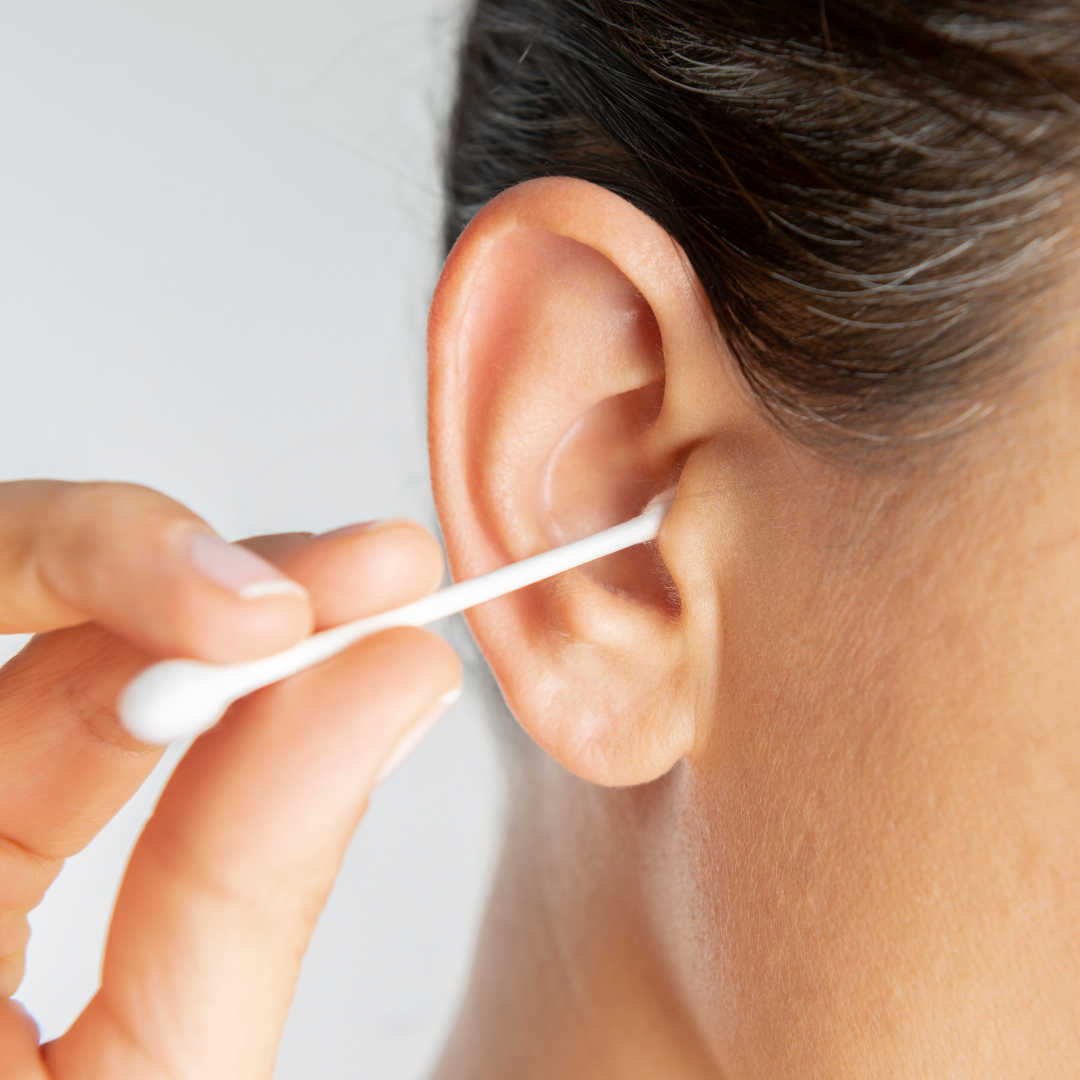
While cotton buds look like simple cleaning instruments, inserting them directly into your ear canal complicates hygiene and can injure sensitive structures. We assess whether your earwax demands professional intervention and provide customized care strategies that match your clinical profile. Healthy ears rarely require aggressive manual intervention; nevertheless, when blockage develops, we assist patients in safely extracting excess cerumen.
The Hidden Dangers of Cleaning Ears with Q-Tips
Natural earwax, medically termed cerumen, does not represent bodily dirt. It functions to intercept foreign debris, suppress bacterial activity, lubricate internal tissues, and guard vulnerable ear canal skin. Standard jaw mechanics and lateral skin shedding propel oxidized wax toward the outer meatus, allowing it to dry and wash away during daily washing.
Placing a cotton applicator inside the canal completely interrupts this automated self-clearing cycle. Even if the swab gathers a trace of surface cerumen, it routinely compacts the remaining mass against the eardrum. Habitual use tends to compress wax into a stubborn plug, producing an uncomfortable blocked feeling that prompts further harmful scrubbing.
Although swabs can sanitize the outer folds of the auricle, they should never penetrate the delicate ear canal.
Mechanical Trauma: Risks of Cotton Swabs in the Ear
The sensitive skin protecting the ear canal exhibits extreme thinness and scratches effortlessly. Small abrasions can cause pain or bleeding and create an opening for bacteria, increasing the risk of an outer-ear infection. Additionally, the swab tip can shear off and lodge itself securely inside the ear canal.
Potential audiological complications include:
- Earwax pushed into a deeper impaction
- Cutaneous tearing, swelling, canal inflammation, or bleeding
- Acute otitis externa or canal infection
- Foreign body retention including detached cotton fibers
- Structural tears or perforations across the eardrum
- Damage to the tiny acoustic middle-ear bones
- Transient hearing reduction or permanent sensorineural loss
- Distressing tinnitus, secondary dizziness, or debilitating ear pain
Serious injuries are uncommon, but they can happen if someone bumps the user’s arm, the swab slips, or it is inserted too far.
How Often Should Earwax Get Removed?
Clinical extraction of earwax is not routinely required on a fixed schedule for most patients. Normal anatomical mechanisms steadily push cerumen toward the exterior, where regular washing rinses the visible concha. Scrubbing too frequently dehydrates the auditory passage, causes persistent irritation, and raises risks for secondary infections or blockages.
Professional removal is necessary when wax obstructs the canal, obscures our view of the tympanic membrane, hinders a hearing aid, or creates physical symptoms.
Clinical Guidance for Safe At-Home Cerumen Care
If earwax is not causing symptoms, leaving it alone is usually the safest option. Wipe only the outer ear with a soft, damp cloth, and let the canal clean itself.
When dry wax demands pre-treatment, we often advise using an OTC cerumenolytic solution or drops composed of glycerin, mineral oil, carbamide peroxide, or saline. Follow the package directions meticulously regarding droplet quantity and consecutive days of use. Stop treatment promptly if the drops elicit sharp pain, noticeable dizziness, allergic rash, or worsening hearing complaints.
Home irrigation is not appropriate for everyone and should only be attempted after a professional confirms it is safe and explains the technique. You must never employ high-pressure dental water jets for ear clearing. Reject risky methods such as ear candling, rigid metal scoops, camera-guided probes, hairpins, and home suction gadgets. These products may burn, cut, puncture, or push wax farther inward.
When Is Professional Earwax Extraction Necessary?
Make an appointment when the ear remains obstructed after using softening drops, wax is tightly packed, or home methods prove unsuccessful. Expert removal is the safest path for patients who struggle to hold still, individuals with narrow ear canals, hearing aid wearers, or those with surgical contraindications to irrigation.
Seek an examination for:
- Unresolved ear discomfort, persistent canal itching, or touch sensitivity
- Blood, cloudy purulence, clear fluid leaks, or foul-smelling ear discharge
- Systemic fever or noticeable swelling around the auricle
- Sudden-onset tinnitus or vestibular dizziness
- Rapid-onset hearing impairment or ongoing hearing deficits post-cleaning
- A possible eardrum perforation or cotton fragment trapped inside
- Persistent impactions interfering with hearing aid operation
Any rapid-onset hearing loss in one ear must be evaluated as an emergency rather than dismissed as a wax plug. Prompt testing can distinguish a blockage from a time-sensitive inner-ear problem.
How Can a Doctor Remove Excess Earwax?
We first examine the canal with an otoscope or microscope to confirm that wax is present and look for infection, injury, or an eardrum perforation. Choosing the safest clinical protocol relies on cerumen firmness, individual canal anatomy, medical records, otologic surgical history, and patient tolerance.
Professional options include:
- In-office or pre-visit cerumen-softening drop applications
- Regulated mechanical irrigation with body-temperature saline for sealed eardrums
- Gentle micro-suction performed under clear binocular visualization
- Manual instrument clearance utilizing dedicated ear loops, fine curettes, or small forceps
Continuous visual monitoring enables the practitioner to navigate around sensitive epithelial tissue and pause immediately if discomfort arises. Patients presenting with dry or tightly impacted wax may require a combination of these clinical approaches. Following cerumen extraction, a complete post-procedure examination verifies that the canal epithelium and tympanic membrane are intact. If fullness, tinnitus, dizziness, or hearing difficulty continues, additional testing can identify another cause.
Arrange Safe In-Office Earwax Removal
When your ears feel plugged or you notice auditory changes, schedule an appointment with our specialists instead of grabbing a cotton swab. Your appointment can include a review of symptoms, previous ear procedures, hearing aid use, home treatments, and factors that may increase wax buildup. Contact us to request an earwax-removal appointment.