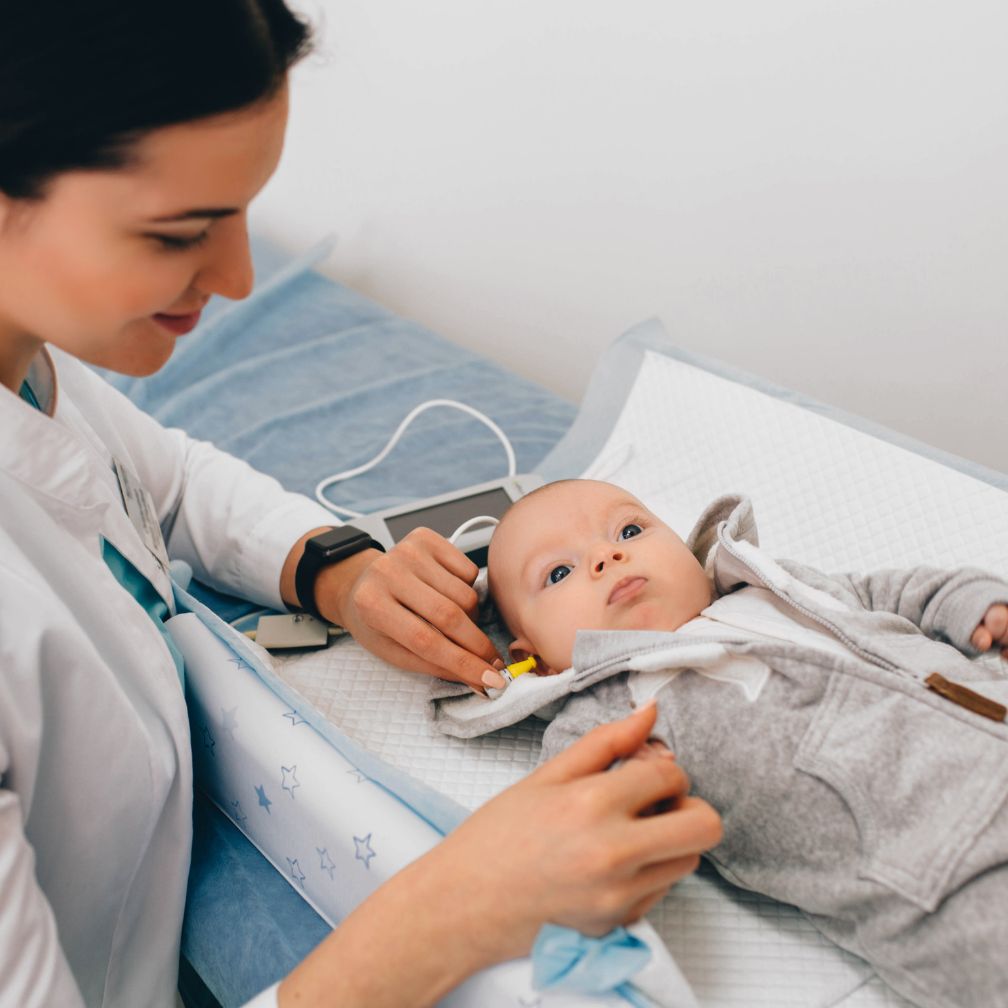
For new parents, finding that their newborn presents auditory issues routinely triggers immense shock and distress. Yet the positive perspective remains that via early care and screening, infants experiencing hearing loss can genuinely thrive over time. Without question, these babies can construct clear speech, social competencies, and enduring bonds within their community, shaping a truly wonderful life!
Deploying personal hearing aids alongside cochlear implantation options provides two highly successful approaches for supporting infants with hearing loss. In the following breakdown, we analyze their primary mechanics and detail how to pick the proper device for your child.
Grasping the Basics of Pediatric Hearing Loss
Hearing impairment in young infants can trace back to multiple potential origins, including:
- Targeted genetic mutations (even within bloodlines having no history of impairment)
- Early prenatal viral exposures such as cytomegalovirus (CMV) or rubella pathogens
- Physical birth-related trauma, such as neonate oxygen loss or preterm birth
- Specific therapeutic drugs given inside specialized newborn intensive units
The single most critical action? Prompt clinical identification. For this reason, infants in the United States are screened for auditory challenges prior to hospital discharge. Dedicated pediatric hearing clinicians advocate for the official “1-3-6” intervention timeline:
- Primary hearing check administered within 30 days of birth
- Confirmed hearing diagnosis confirmed within 90 days of life
- Prompt intervention (employing amplification units or structured therapy) initiated inside 180 days of birth
Reaching these target timelines offers infants an exceptional path toward healthy speech, expressive language, and cognitive development. If you want guidance concerning these screening milestones, your trusted pediatrician will eagerly guide you!
Hearing Aids for Infants
For young patients experiencing mild to severe hearing loss, hearing aids are often the first line of treatment. These compact, customized units amplify acoustic signals, aiding babies in discerning human speech and ambient sounds more accurately.
Primary hearing aids remain:
- Exceptionally safe for use on newborns aged just a few weeks
- Constructed using pliable, comfortable custom molds that adapt as the baby matures
- Assembled with locking battery compartments and specialized safety features geared toward babies
- Precisely calibrated by a trained pediatric audiologist to align with your baby’s unique hearing profile
While your infant develops, these devices demand ongoing professional tuning to ensure snug placement and precise amplification.
Advanced Surgical Solutions: Infant Cochlear Implants
If a child experiences profound to severe sensorineural hearing impairment and demonstrates limited success with standard amplification, medical teams often recommend a cochlear implant. Unlike external acoustic hearing aids, cochlear implant systems:
- Require surgical placement directly into the temporal bone
- Directly bypass compromised areas within the cochlear system
- Convert sound waves into focused electrical signals that directly excite the acoustic nerve
Advanced cochlear implant devices serve as:
- Fully FDA-sanctioned for use in infants starting at 9 to 12 months of age
- Highly successful when supported through early developmental habilitation and strong home support
- Recommended only after a thorough evaluation by a certified audiologist and otolaryngologist
This evaluative framework encompasses neuroimaging scans, specialized auditory testing, and setting realistic expectations for future communicative success.
Evaluating Hearing Aids Against Cochlear Implants
- Mild to severe hearing loss relies on Hearing Aids; Severe to profound hearing loss requires Cochlear Implants
- Non-Invasive wearable design: Hearing Aids; Invasive (Surgical): Cochlear Implants
- Physical sound amplification: Hearing Aids; Digital electrical impulse transformation: Cochlear Implants
- Application starts during early infancy: Hearing Aids; Access starts at 9-12 months: Cochlear Implants
Final Takeaways: Navigating Infant Hearing Solutions
If your newborn faces a confirmed hearing impairment diagnosis, you can rely on excellent technological options and plenty of support. Thanks to collaboration with dedicated pediatric audiologists, many children go on to develop language skills that are on par with their peers.
Whether your baby benefits most from custom hearing aids or a cochlear implant system, prompt intervention establishes a foundation for lifelong communicative success.
Do you need professional advice regarding your baby’s current hearing health? Contact our clinical team today for a complete diagnostic review and tailor-made care roadmap.