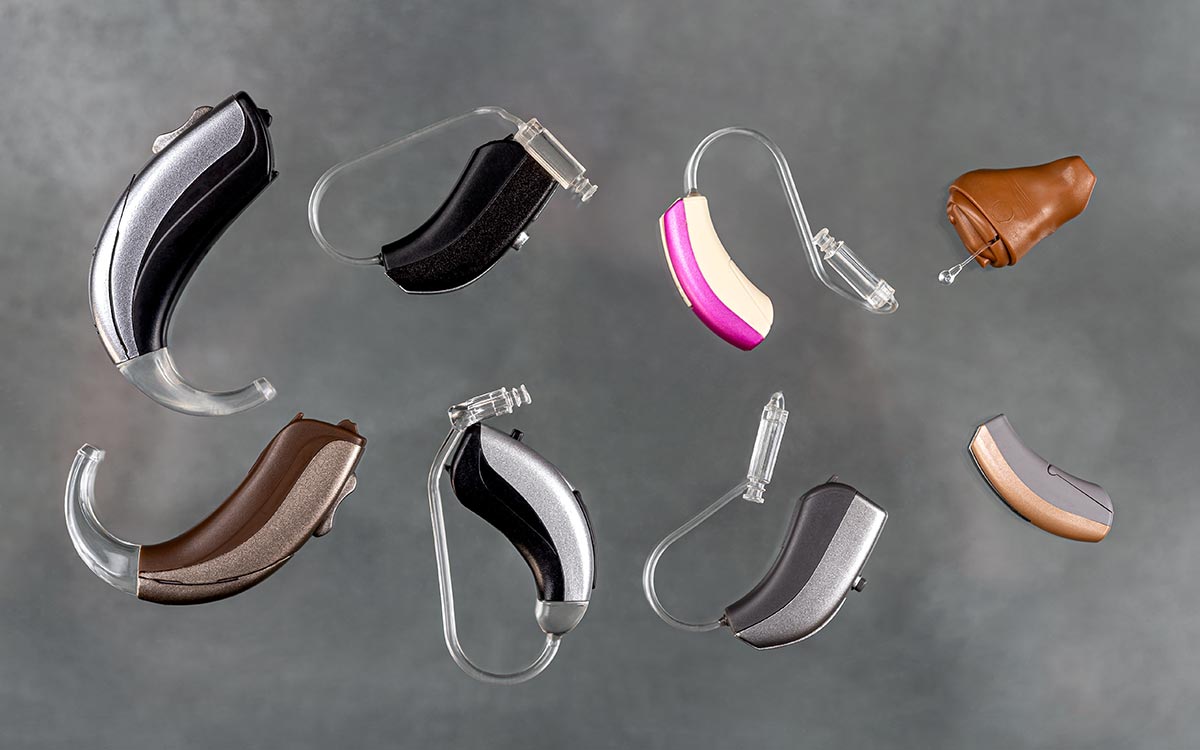
Selecting the right hearing aid can be a daunting task, given the wide array of styles, sizes, and technological features available in modern devices. But regardless of your needs, there’s an auditory solution for every lifestyle, preference, and degree of hearing loss or tinnitus. The key is merely choosing the one that fits you best.
Gaining an accurate understanding of common hearing aid categories will empower you to make an educated decision for your hearing health. In this analysis, we glance at current styles and the unique characteristics that define them.
Understanding In-the-Canal (ITC) Models
Basic Summary:
ITC models are custom-made to sit within the ear canal, though a small part of the shell remains visible in the ear’s outer portion.
Why users select them:
- Provides a subtle look compared to traditional styles
- Custom-molded for ease
- Works well for people experiencing mild hearing challenges
Because they provide both discretion and helpful features, ITC models are an excellent pick for those new to hearing technology.
Exploring IIC (Invisible-in-Canal) Options
What they represent:
IIC hearing aids are the tiniest custom design available. This style rests deep in the ear for an entirely covert appearance.
Why they are popular:
- Highest degree of invisibility for the wearer
- Natural sound quality due to mic placement
- An ultra-light build makes them easy to wear all day
IIC devices are mainly aimed at those with moderate hearing needs who want their technology to remain completely unnoticed.
Full and Partial ITE Options
What they represent:
These models fill either the complete or bottom half of the outer ear bowl. These are custom-fabricated for an exact match based on your ear’s anatomy.
Why users choose them:
- A slightly larger frame houses advanced tech and more powerful batteries
- Simpler to manage for those with dexterity challenges
- Effective for mild to severe hearing loss
Many patients pick ITE devices because they provide a streamlined, self-contained design that doesn’t hook over the ear.
BTE (Behind-the-Ear) Essentials
What they are:
These devices rest on the outer portion of the ear’s anatomy. Audio is sent via a thin tube or a personalized mold in the canal.
Why users choose them:
- Regarded as one of the most dependable and sturdy designs available
- Work for almost all degrees of hearing loss
- The size provides plenty of space for the latest connectivity features and rechargeable hardware
If you need a robust hearing aid that is simple to operate and offers high-power output, the BTE style is ideal.
Receiver-in-Canal (RIC) Hearing Aids
What they represent:
While they resemble BTE units, RIC aids place the speaker directly in the canal for better sound delivery.
Market Appeal:
- Minimizes the “plugged up” sensation for more pure hearing
- Small, feather-light, and comfortable
- An adaptable solution that works for various degrees of auditory needs
Thanks to their ease and visual appeal, RIC devices have become a gold standard.
Extended-Wear Hearing Aids
Overview:
These devices are inserted far in the ear canal by an audiology professional and can stay in place for several weeks at a time.
The Appeal:
- Provides an effortless experience with no daily maintenance required
- Offers an entirely covert solution for hearing health
- You can move about your whole life—including sports and rest—while wearing them
For an autonomous method of hearing assistance, extended-wear technology is the top recommendation.
Connected Wireless Systems
Functionality:
Bluetooth-ready hearing aids allow for a wireless digital bridge between your hearing technology and your smart devices.
Why people select them:
- Enjoy immediate audio streaming from your phone or TV right into your ears
- Adjust settings through an app
- Perfectly suited for the needs of a tech-savvy, connected individual
This wireless technology is located in many modern behind-the-ear and in-the-canal models.
Alternative Surgical Options
What they represent:
This technology involves an operative procedure to place a device that physically stimulates the bones of the middle ear.
Why implants are used:
- Choice for people who cannot use traditional hearing aids
- Solves the problem of canal discomfort caused by regular hearing aids
Candidates for middle-ear implants must complete an exhaustive evaluation by a hearing specialist.
Your Path to Better Sound
Selecting an instrument is an individualized process that takes into account your hearing severity, lifestyle habits, and visual preferences. By visiting an expert, you can investigate various models and see which one feels most natural to you.
Start traveling toward an environment of better sound by arranging a consultation or hearing test with an expert specialist. This simple step is the basis for improved hearing and better connections with those around you.
Sources:
https://www.mayoclinic.org/diseases-conditions/hearing-loss/in-depth/hearing-aids/art-
20044116
https://www.hearinglife.com/hearing-aids/types
https://www.nidcd.nih.gov/health/hearing-aids